Logo
Logo
  • About
    • Previous
    • About
    • About GRI
    • Resilience Overview
    • Team
  • Resources
    • Previous
    • Resources
    • Resilience News
    • Publications
    • Upcoming Events
    • Resilience Projects
  • Resilience Programs
    • Previous
    • Resilience Programs
    • Global Resilience Research Network
    • Resilience Champions
    • Corporate Partnerships
    • Seed Grant Program
  • Resilience Education
    • Previous
    • Resilience Education
    • Resilience Courses
    • Degree Programs
  • Contact
  • LinkedIn

Resilience News

  • GRI Core Projects
  • Publications
  • Resilience News
  • Stephen Flynn
  • A–Z
  • Z–A
  • Newest First
  • Oldest First
  • Architecture
  • Award
  • Barbados
  • Behavioral Health
  • Black Sea
  • Book Launch
  • caribbean
  • Chief Technology Officer
  • Climate change
  • Coastal Infrastructure
  • Coastal Resilience
  • Community
  • Community Resilience
  • COVID-19
  • Critical Infrastructure
  • Cyber Resilience
  • Cybersecurity
  • designs
  • Distinguished Senior Fellow
  • Dominica
  • Ecology
  • Economic Resilience
  • Educational Resilience
  • Emergency response
  • Energy
  • Enterprise
  • Enterprise Resilience
  • Environmental Resilience
  • Event Recap
  • Faculty Affiliate
  • Food Crisis
  • global resilience
  • GrainCrisis
  • GRI Whitepaper Series
  • Healthcare
  • Hurricane Season
  • Individual Resilience
  • Internet Resilience
  • island nations
  • Massachusetts
  • Nada Sanders
  • nantucket
  • Odesa
  • Organizational Resilience
  • Partners
  • Policy and practice
  • Project: Creating a resilient Internet of Things (IoT)
  • Project: Critical Infrastructure Network (CInet)
  • Research
  • Resilience
  • Russia
  • Social Resilience
  • Societal Resilience
  • Solution: Critical Infrastructure Resilience
  • Solution: Cyber Resilience
  • Solution: Incident Management & Business Continuity and Recovery
  • Solution: Integrated Resilience Action Planning for Enterprises
  • Solution: Integrated Resilience Enhancement Solution
  • Solution: Supply Chain
  • Solution: Vetted Technology Resilience
  • Stephen Flynn
  • Supply Chain
  • Sustainability
  • Technology
  • Terrorism
  • Transportation
  • Ukraine
  • Urban Development
  • USAID
  • Vaccination

GRI CTO Mark Patterson named Associate Dean for Research and Graduate Affairs in Northeastern’s College of Science

Global Resilience Institute Chief Technology Officer Mark Patterson has been named Associate Dean for Research and Graduate Affairs in Northeastern University’s College of Science (COS). Patterson will continue in his post at GRI, with his new appointment taking effect July 1. “We are delighted to have Professor Mark Patterson join the leadership team of the College,” COS Dean Ken Henderson wrote in an announcement to faculty and staff. Former COS ADR David Budil, the longest-serving member of the Dean’s Office, will return to the Department of Chemistry and Chemical Biology to continue his research and teaching. Budil steps down having made many contributions to the College, including overseeing a dramatic increase in external funding.

New resilience organization at FEMA aims to build ‘culture of preparedness’

The 2018 Atlantic Hurricane Season has begun, and federal first responders are preparing ways to better respond to historic storms like those seen in last year's record-setting season. In 2017 alone, the Federal Emergency Management Agency (FEMA) responded to dozens of natural and other disasters across America and its island territories, including multiple-strike situations like Hurricanes Harvey, Irma, and Maria. According to FEMA, roughly 25.8 million people were affected by Harvey, Irma, and Maria -- eight percent of the entire U.S. population. In testimony before the House Appropriations Committee on November 30, 2017, FEMA Administrator Brock Long emphasized the importance of resilience for future disaster preparedness efforts. "We have to do more pre-disaster mitigation," Long stressed. "Pre-disaster mitigation is the key to becoming more resilient and reducing disaster impacts."

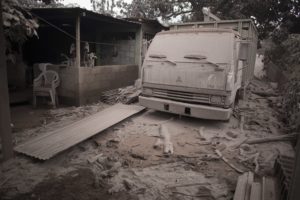
Explosive volcanic eruption in Guatemala releases scorching pyroclastic flows

An explosive volcanic eruption in Guatemala unleashed pyroclastic flow on Sunday - a scorching mix of gases, rocks, lava, and ash, that can travel upwards of 400 mph with internal temperatures ranging from 90 to 1,300 degrees Fahrenheit - burying structures, roads and people. The flows were the cause of at least 69 deaths by Tuesday, with this number expected to rise as ash-covered towns are excavated. In an interview with the New York Times, the President of Guatemala's Association of Municipal and Departmental Firefighters Dr. Otto Mazariegos likened the eruption to Pompeii, estimating that the death toll was “probably in the hundreds.” By Tuesday morning, only 17 of the dead were able to be positively identified.

GRI doctoral research assistants win award for ‘resilient critical infrastructure governance’ research at DHS Centers of Excellence Summit

Two Global Resilience Institute Doctoral Research Assistants took home the top prize for best graduate poster at The Department of Homeland Security (DHS) Centers of Excellence (COE) Summit on Thursday. The poster, presented by Maria Robson and Lizzy Warner, explored a network science and ArcGIS approach to enhance resilient critical infrastructure governance. The research focuses on providing policymakers and infrastructure owners and operators with tools to build a comprehensive understanding of critical infrastructure interdependencies, in order to build resilience and limit disruptions in one system from cascading into another.

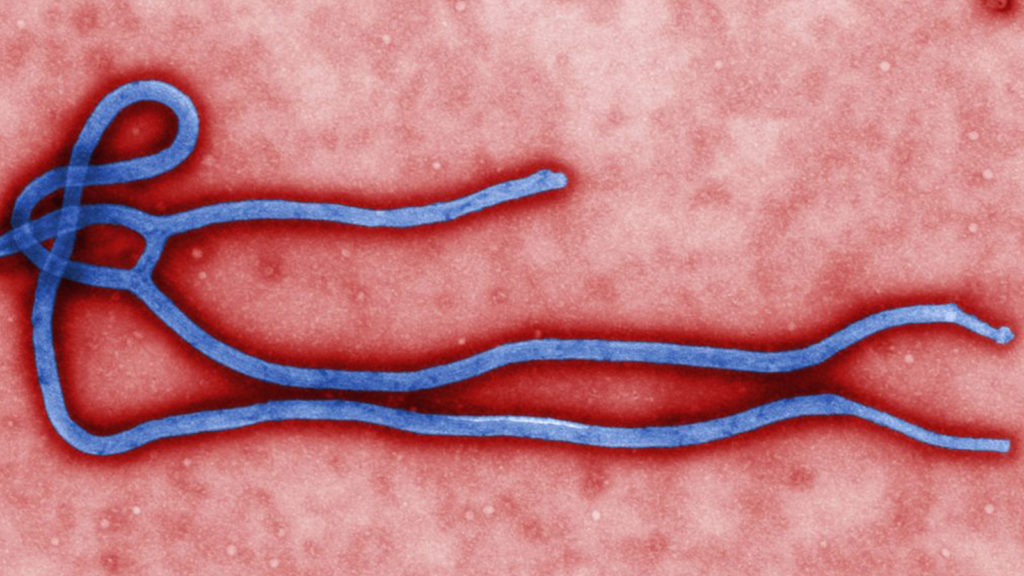
Managing the risk of urban epidemics: The case of Ebola

The Ebola outbreak in the Democratic Republic of Congo (DRC) is one of the first urban Ebola outbreaks, specifically in Mbandaka, a city of over one million residents. This outbreak began in the rural town of Bikoro before spreading, and has resulted in at least 27 deaths and 58 suspected cases in total . One death and four cases have occurred in the city. In response, the World Health Organization (WHO) will send over 15,000 doses of the experimental Ebola vaccines to the country, as well as safe burial body bags to prevent exposure through the spread of bodily fluids during funerals. Merck, the vaccine's developer, is providing the medication at no charge while GAVI, the Vaccine Alliance - a global public-private health partnership body - has provided one million dollars to support health workers. Vaccine delivery is logistically and operationally challenging. The outbreak began in Bikoro, which lacks basic infrastructure such as electricity and telecommunications; the vaccine requires being stored between -76 and -112 degrees Fahrenheit. The vaccines are being transported in special containers that can maintain that temperature range for six days and portable power generators are being brought in for additional energy.

Alberto brings torrential rain and landslides to the Southeast U.S.

The first named storm of the 2018 Atlantic hurricane season made landfall in the Florida Panhandle on Monday. Subtropical storm Alberto, which by midweek was downgraded to a tropical depression, has caused torrential rain, landslides, flash flood advisories, and winds up to 65 mph in the southeastern region of the United States. The region experienced intense rains the week prior, saturating the ground and making it more prone to flooding and landslides. Thus far, thousands of people have been left without power in the affected areas, and states of emergency have been declared in Florida, Alabama, Mississippi, and North Carolina. Alberto is expected to stay classified as a tropical depression until it hits the Great Lakes, before incorporating into surrounding weather systems.

Dozens reported dead as heat wave engulfs Karachi, in southern Pakistan

Dozens have died during a sweltering heat wave in Karachi, a southern port city in Pakistan, according to the Edhi Foundation, an organization that runs the city’s morgue. The foundation reports that 114 bodies were brought to their morgue from Saturday through Monday, and attributed 65 of the deaths to heat stroke. The province’s health minister, Fazlullah Pechuho, disputes that report.Sustained temperatures of over 104 degrees Fahrenheit, including upwards of 111 degrees on Monday, caused local authorities to urge people to stay inside and drink water. However, in a majority-Muslim city of 15 million, the heat wave has coincided with Ramadan, the Muslim holy month, in which followers fast from sunrise to sunset. This fasting includes the intake of water.

One year after Manchester Arena attack, community gathers to remember those affected and share ‘spirit of solidarity’

On May 22, 2017 Salman Abedi detonated a bomb in the foyer of the Manchester Arena as an Ariana Grande concert let out, killing 22 people and injuring 240 more. The perpetrator died in the attack. This horrific incident prompted widespread community mobilization as the city rallied to transport and house those left stranded and later as they tried to maintain unity and held a number of interfaith vigils. In the days following the attack, a benefit concert headlined by Ariana Grande raised £18 million for the “We Love Manchester” fund which donated money to victims and their families.

World Central Kitchen promotes community resilience, this time in Hawaii

On September 20, 2017, Hurricane Maria devastated the U.S. island of Puerto Rico. Recovery has been slow and limited in the months since, and thousands of customers remain without power. Through the worst of Maria’s aftermath, however, volunteers swarmed the island to provide what comforts they could to the island’s residents. World Central Kitchen (WCK), an non-profit that uses “the power of food to empower communities and strengthen economies”, quickly set up its kitchens to provide meals for those affected by the hurricane. According to the organization’s website, 19,000 volunteers provided 3.4 million meals across the island. Although much of Puerto Rico is returned to a certain sense of normalcy, WCK has continued to invest its efforts in the local economy, awarding grants to local food truck owners, chefs, and agriculture.

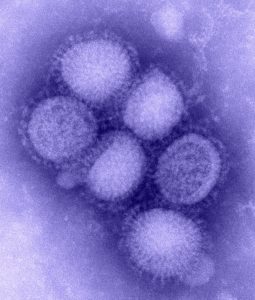
100th anniversary of the Spanish Flu: Has the world become more resilient to pandemics?

One hundred years ago, the 1918 Spanish influenza pandemic infected one third of the global population, killing between 50 and 100 million people, and representing both the deadliest and fastest epidemic in human history. Two-thirds of these deaths occurred in 10-weeks during the autumn of 1918. Within the United States, the Spanish flu killed about as many individuals as AIDs would over 40 years. Major cities such as New York City and Philadelphia saw slowdowns of commerce as streets and large gathering areas emptied out. Unlike most other strains of the influenza virus, this strain killed millions of young adults with strong immune systems; in fact, this strength became a weakness because the Spanish Flu killed individuals by causing their immune systems to react so powerfully that it caused them to asphyxiate from bloody coughing and bleeding from different orifices, usually resulting in death. Breakthroughs in medical technology, such as vaccinations, and the advancement of scientific knowledge since the Spanish Flu pandemic have provided practitioners new tools to prevent epidemics.

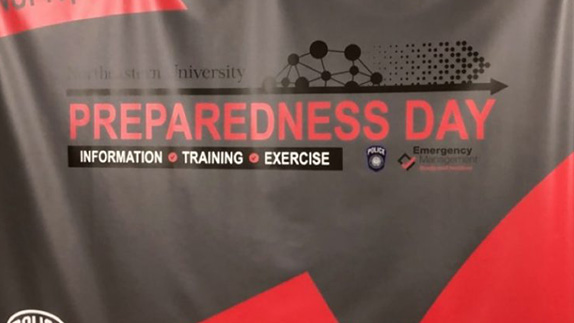
GRI research assistants reflect on lessons learned from Northeastern University’s Preparedness Day

Preparedness Day at Northeastern University was a round of training and informational sessions taught by police officers, detectives, and experienced health and safety experts. Our research assistants attended various sessions that included a wide range of categories from personal preparedness in daily lives to international travel safety. The key takeaways from each session contributed to GRI’s resilience preparedness informational toolkit, which can be seen summarized below. Overall, our team learned a lot about how the theme of resilience must be incorporated into all aspects of preparedness. We are excited to participate again in the future!

Dam bursts in Kenya after weeks of heavy rain, sweeping away homes and killing dozens

At least 44 people were killed when the Patel dam burst in the Nakuru county of Kenya on Wednesday evening. Authorities say 40 others were injured and dozens were missing, after the wave of water, which was over a five feet high and 1,500 feet wide, obliterated everything in its surrounding area. “It was a sea of water. My neighbour was killed when the water smashed through the wall of his house. He was blind so he could not run. They found his body in the morning,” Veronica Wanjiku Ngigi, a resident of one of the communities devastated by the break told Reuters. “My other neighbors also died. All our houses have been ruined.” The dam, which was reported to have cracks and leaks prior to the collapse, was located just over 100 miles north of Nairobi on a large privately-owned commercial farm in a rural agricultural area. According to residents of the surrounding communities, two other dams on the property are also full and could burst in the future.
  • Previous
  • 59
  • 60
  • 61
  • 62
  • 63(current)
  • 64
  • 65
  • 66
  • 67
  • Next