Logo
Logo
  • About
    • Previous
    • About
    • About GRI
    • Resilience Overview
    • Team
  • Resources
    • Previous
    • Resources
    • Resilience News
    • Publications
    • Upcoming Events
    • Resilience Projects
  • Resilience Programs
    • Previous
    • Resilience Programs
    • Global Resilience Research Network
    • Resilience Champions
    • Corporate Partnerships
    • Seed Grant Program
  • Resilience Education
    • Previous
    • Resilience Education
    • Resilience Courses
    • Degree Programs
  • Contact
  • LinkedIn

Resilience News

  • GRI Core Projects
  • Publications
  • Resilience News
  • Stephen Flynn
  • A–Z
  • Z–A
  • Newest First
  • Oldest First
  • Architecture
  • Award
  • Barbados
  • Behavioral Health
  • Black Sea
  • Book Launch
  • caribbean
  • Chief Technology Officer
  • Climate change
  • Coastal Infrastructure
  • Coastal Resilience
  • Community
  • Community Resilience
  • COVID-19
  • Critical Infrastructure
  • Cyber Resilience
  • Cybersecurity
  • designs
  • Distinguished Senior Fellow
  • Dominica
  • Ecology
  • Economic Resilience
  • Educational Resilience
  • Emergency response
  • Energy
  • Enterprise
  • Enterprise Resilience
  • Environmental Resilience
  • Event Recap
  • Faculty Affiliate
  • Food Crisis
  • global resilience
  • GrainCrisis
  • GRI Whitepaper Series
  • Healthcare
  • Hurricane Season
  • Individual Resilience
  • Internet Resilience
  • island nations
  • Massachusetts
  • Nada Sanders
  • nantucket
  • Odesa
  • Organizational Resilience
  • Partners
  • Policy and practice
  • Project: Creating a resilient Internet of Things (IoT)
  • Project: Critical Infrastructure Network (CInet)
  • Research
  • Resilience
  • Russia
  • Social Resilience
  • Societal Resilience
  • Solution: Critical Infrastructure Resilience
  • Solution: Cyber Resilience
  • Solution: Incident Management & Business Continuity and Recovery
  • Solution: Integrated Resilience Action Planning for Enterprises
  • Solution: Integrated Resilience Enhancement Solution
  • Solution: Supply Chain
  • Solution: Vetted Technology Resilience
  • Stephen Flynn
  • Supply Chain
  • Sustainability
  • Technology
  • Terrorism
  • Transportation
  • Ukraine
  • Urban Development
  • USAID
  • Vaccination

How a Cherokee Leader Ensured His People’s Language Survived

In this article by Michelle Cyca for History.com, Ellen Cushman, a faculty affiliate at GRI, and a member of the Cherokee Nation says syllabaries have an advantage over alphabets.

How a 2016 wildfire impacted an entire region | Leveraging Opportunity Zones for Resilience

The Blue Cut Fire began on the morning of August 16, 2016 in the Cajon Pass, a mountain pass in San Bernardino County, just west of the Interstate 15 highway. When it was first reported just before eleven in the morning, the fire was only two acres; by nighttime, it had reached 18,000 acres. Flames traveled up a mountain slope to a point where the wind could carry embers over the highway, prompting the closures of portions of Highway 138 and both sides of I-15. California Governor Jerry Brown declared a state of emergency for San Bernardino County on August 16 after the fire had burned 15,000 acres in under 12 hours. The following evening, 82,000 residents had been forced to evacuate from their homes and by August 19 fire officials estimated that 96 homes had been destroyed by the fire.


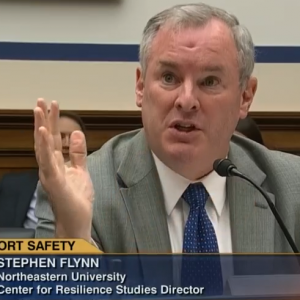
House Hearing on the Threat of a Smuggled Dirty Bomb

Global Resilience Institute Director Stephen Flynn testified before the House of Representatives’ Coast Guard and Maritime Transportation Subcommittee on October…

House GOP unveils $81B disaster relief for hurricanes, fires

House Republicans on Monday unveiled an $81 billion disaster aid package to help hurricane-ravaged communities and states hit by wildfires, almost double the amount requested by President Donald Trump. GOP leaders promised a vote this week on the measure, which would bring the total provided in response to this year's devastating round of hurricanes to more than $130 billion — exceeding the cost to taxpayers of Hurricane Katrina.

Hospitals in Mogadishu struggled to accommodate an influx of extremely injured civilians from the truck bombings

On October 14, a double truck bombing exploded in Mogadishu, Somalia, which injured 300 civilians and killed approximately 277 people. First responders and hospital staff were quickly overwhelmed as most civilians were barely recognizable from their burns and needed immediate medical services. In Mogadishu, the two major hospitals closest to the explosion site are Banadir Hospital and Medina Hospital. The Federal Government of Somalia classifies Banadir hospital to be the only ‘National Referral Hospital’ in the country, which entails they offer maternal and child health facilities and services. Medina hospital treats “several hundred war-wounded patients and expectant mothers every month”, and is focused more on trauma and emergency services.

Hong Kong protests display interdependence of social resilience and economic stability

Massive protests throughout Hong Kong have overcome the city over the last 11 weeks, displaying the resilience implications of social inequality, and increasing economic concerns throughout the city.

Holly Jimison and Misha Pavel in News@Northeastern: A Class Project Inspired This Healthcare Device to Solve a Common Drug Storage Problem

It is a problem of refrigeration. Almost half of the pharmaceuticals sold in the United States are biologics that must…

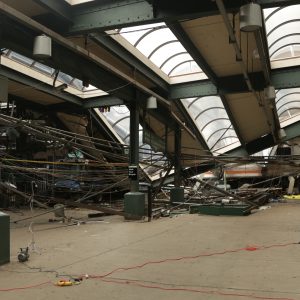
Hoboken Commuter Rail Train Crash

On 29 September 2016 at 8:45am, New Jersey Transit (NJT) commuter train No. 1614 traveling from Spring Valley, NY to…
higher ed si report

Higher Education in New England – Planning a Post-COVID-19 Recovery

The New England Commission on Higher Education accredits over 200 public and private colleges and universities across the six states within the region, giving New England a larger per capita percentage of higher education institutions than any other region in the United States.
university lecture

Higher Education as Critical Infrastructure

Published May 5, 2021.   The COVID-19 pandemic has exposed many realities about the critical infrastructure in this country, including…

High maternal mortality rates reveal lack of resilience in public health

In America, black women are 3 to 4 times more likely to die as a result of their pregnancies compared to white women. Further, America is 32nd out of 35 in the ranking of infant mortality rates among the world’s wealthiest nations.

Helping cities of all sizes: California Opportunity Zone Partnership aims to guide investment

Last September marked the launch of the California Opportunity Zone Partnership, organized by the national nonprofit organization Accelerator for America and consisting of the State of California, the Energy Foundation, and the Cities of Oakland, San Francisco, San Jose, and Los Angeles. It aims to support government officials of small to medium sized California cities in taking advantage of their opportunity zones in  ways that will be beneficial to their communities.
  • Previous
  • 40
  • 41
  • 42
  • 43
  • 44(current)
  • 45
  • 46
  • 47
  • 48
  • Next