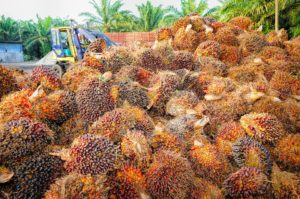
Palm oil: environmental impact and sustainability
Palm oil, now the world’s most popular vegetable oil, epitomizes global tensions between environmental preservation and economic development of the Global South. Although oil palms are an ancient staple crop, palm oil use exploded in the last few decades due to its versatility and crop efficiency, producing unequaled oil yield per acre. Aside from cooking oil, palm oil is an ingredient in a wide variety of common items such as toothpaste, makeup, baked goods, and bio-diesel. Requiring only half as much land as other vegetable oil sources, palm oil quickly rose to one third of global oil consumption ringing in 72 million tons in 2018. However, as global demand grows, with a projected market value of $88 billion by 2022, concerns regarding its sustainability have risen to the forefront of environmental resilience discussions.