Logo
Logo
  • About
    • Previous
    • About
    • About GRI
    • Resilience Overview
    • Team
  • Resources
    • Previous
    • Resources
    • Resilience News
    • Publications
    • Upcoming Events
    • Resilience Projects
  • Resilience Programs
    • Previous
    • Resilience Programs
    • Global Resilience Research Network
    • Resilience Champions
    • Corporate Partnerships
    • Seed Grant Program
  • Resilience Education
    • Previous
    • Resilience Education
    • Resilience Courses
    • Degree Programs
  • Contact
  • LinkedIn

Resilience News

  • GRI Core Projects
  • Publications
  • Resilience News
  • Stephen Flynn
  • A–Z
  • Z–A
  • Newest First
  • Oldest First
  • Architecture
  • Award
  • Barbados
  • Behavioral Health
  • Black Sea
  • Book Launch
  • caribbean
  • Chief Technology Officer
  • Climate change
  • Coastal Infrastructure
  • Coastal Resilience
  • Community
  • Community Resilience
  • COVID-19
  • Critical Infrastructure
  • Cyber Resilience
  • Cybersecurity
  • designs
  • Distinguished Senior Fellow
  • Dominica
  • Ecology
  • Economic Resilience
  • Educational Resilience
  • Emergency response
  • Energy
  • Enterprise
  • Enterprise Resilience
  • Environmental Resilience
  • Event Recap
  • Faculty Affiliate
  • Food Crisis
  • global resilience
  • GrainCrisis
  • GRI Whitepaper Series
  • Healthcare
  • Hurricane Season
  • Individual Resilience
  • Internet Resilience
  • island nations
  • Massachusetts
  • Nada Sanders
  • nantucket
  • Odesa
  • Organizational Resilience
  • Partners
  • Policy and practice
  • Project: Creating a resilient Internet of Things (IoT)
  • Project: Critical Infrastructure Network (CInet)
  • Research
  • Resilience
  • Russia
  • Social Resilience
  • Societal Resilience
  • Solution: Critical Infrastructure Resilience
  • Solution: Cyber Resilience
  • Solution: Incident Management & Business Continuity and Recovery
  • Solution: Integrated Resilience Action Planning for Enterprises
  • Solution: Integrated Resilience Enhancement Solution
  • Solution: Supply Chain
  • Solution: Vetted Technology Resilience
  • Stephen Flynn
  • Supply Chain
  • Sustainability
  • Technology
  • Terrorism
  • Transportation
  • Ukraine
  • Urban Development
  • USAID
  • Vaccination

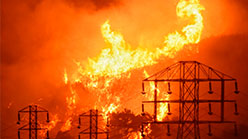
Five killed and thousands displaced after fire rips through Kijiji slum in Nairobi

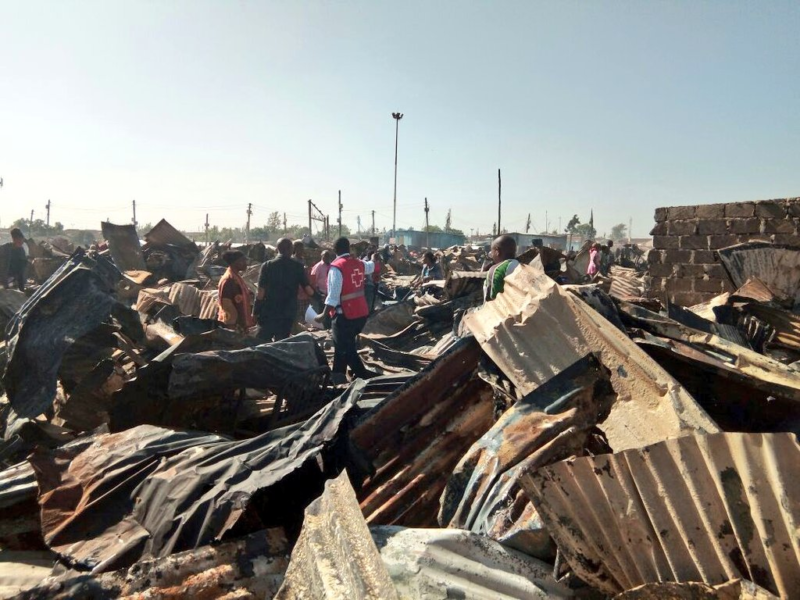
On January 28, 2018, a fire engulfed the entirety of the Kijiji slum in the Lang’ata neighborhood of Nairobi, near the Southlands estate. The blaze resulted in the death of five people. Due to the informality of the settlement, estimates of the number of displaced people vary, but CNN approximates the total to be around 6,000. The governor of Nairobi, Mike Sonko, called for a full investigation of the fire, accompanied by a tweet that claimed that "those found guilty will face the full force of the law." The cause of the fire has yet to be determined. and efforts to control the blaze have been highly criticized. Firefighters reportedly arrived within minutes, but according to the Kenya Red Cross, it took eight hours to contain the fire. This was due to a number of compounding factors, including a lack of access roads throughout the slum, and an insufficient amount of water.

Using Shodan as a tool to find vulnerable devices | GRI Blog

In the last blog post, we looked at the case study of the Kemrui Water company as outlined by the Verizon Data Breach Report which underscored potential consequences of having industrial control systems connected to the public internet. This post will go a little bit deeper and look at the ease in which a device similar to those that were probably in use at the water company and connected to the public internet can be found and potentially exploited. For this process I used the tool ‘Shodan’. Shodan is essentially a search engine for internet connected devices. It ‘crawls’ the internet, sending out connection requests and recording the public results, which include banner information, open ports, and running services. There have been numerous articles and blogs that highlight how Shodan has been used to find internet of things devices such as webcameras, license plate readers, programmable logic controllers (PLC), even ships using satellite antennas and botnet command and control servers.

U.S. Department of Defense reviewing policies after security concerns arise over fitness tracking feature

The growth of wearable technology, as well as the ubiquity of cell phones, has become a prime example of the tradeoff between security and convenience. The most recent vulnerability came to light on January 27, when an Australian security student was looking at the public heat map of the location of Fitbit and other fitness app users, published by GPS tracking company Strava. The map shows anonymized data, amassed from 2015 to September 2017, of the location and routes of people who track their workouts, an increasingly common and popular feature. However, the growth of these apps, as well as a Pentagon fitness initiative in 2013 which distributed Fitbits, means many American soldiers around the world may use them to track their fitness – and daily steps. This constant use results in the heat maps showing not just the locations of what may be secret military installations, but the habitual movements of those stationed there – a clear security risk.

Environmental risks top World Economic Forum list of global threats; Challenges will require resilience ‘lens’

Extreme weather events and natural disasters were identified as the world's most prominent risks by the 2018 Global Risks Report, released at the World Economic Forum (WEC) in Davos, Switzerland. The WEC report's findings acknowledge that storms and disruptive natural events are occurring more often and with more severity -- noting that September 2017 was the most intense month on record in terms of the intensity and duration of Atlantic storms, as well as the most expensive hurricane season "ever." It doesn't only take a large storm to have far-reaching consequences, however. As our society grows increasingly more connected, even small disruptions have cascading effects. “Humanity has become remarkably adept at understanding how to mitigate conventional risks that can be relatively easily isolated," the report states. "But we are much less competent when it comes to dealing with complex risks in the interconnected systems that underpin our world, such as organizations, economies, societies, and the environment."

Building resilience ahead of the next major storm; Looking back at the Blizzard of ’78 on its 40th anniversary

Forty years ago, a major storm descended upon New England. Remembered today as the "Blizzard Of ’78," the storm was record-breaking and deadly. It started in Boston around 7:30 a.m. on Monday, February 6. It would last for nearly 36 hours, stranding thousands of cars, destroying homes and paralyzing the region for a week. On the eve of the anniversary, WBZ-TV asked the question: Could it happen again? Global Resilience Institute Founding Director Dr. Stephen Flynn weighed in, on preparedness, resilience and recovery:

Making our infrastructure more resilient to cyber-attacks | GRI Blog

As we develop the concept of CINET, one of our main challenges is to illustrate how separation of control networks from the public Internet and the existence of a dedicated channel for information sharing could help make our infrastructure more resilient to cyber-attacks. There are only a few public cases of disruptive or disruptive cyber attacks targeting critical infrastructure. At this point, Stuxnet and the Ukraine power grid attacks have been beaten to death. In a series of posts, we are going to review a few less well-known ones. For those readers who treat the Verizon Data Breach Incident Report as the Bible of cybersecurity, this case study will be familiar. For the rest of you, here is a brief recap.

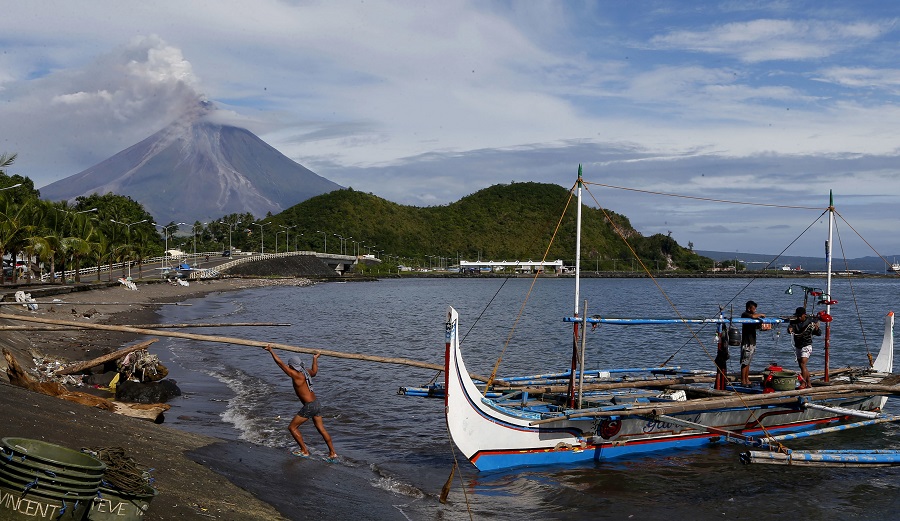
Philippines volcano Mount Mayon erupts, forcing 74,000 people to evacuate nearby villages

For nearly two weeks, intense activity from Mount Mayon in the Philippines has disrupted life for thousands in the region. The Philippine Institute of Volcanology and Seismology (PHIVOLCS-DOST) describes the several bouts of activity as "episodes of intense but sporadic lava fountaining from the summit crater," along with multiple "tremor events" and "numerous rockfall events." Originally 56,217 people were forced out of the Legazpi region to seek shelter in evacuation camps scattered across nine nearby cities, however, in the span of one evening this number increased to 74,000 evacuees in 66 emergency shelters. Parents fear their children will fall behind in their education. To secure an uninterrupted schedule, temporary learning centers will become available within evacuation camps.

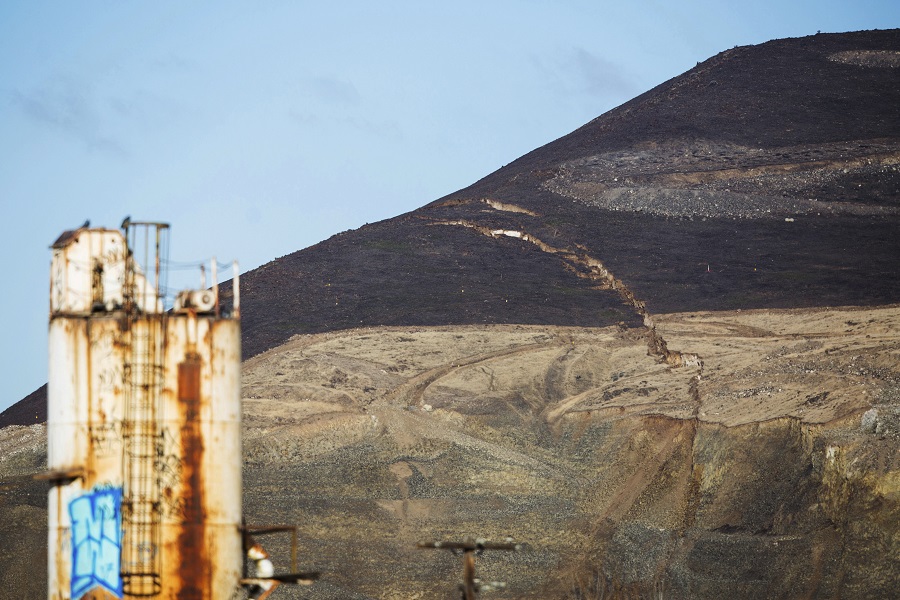
Officials prepare for a potential landslide in Washington State, as four million cubic yards of rock slowly inch downhill

In south-central Washington State, a fissure located on Rattlesnake Ridge has put officials on alert as about four million cubic yards of volcanic rock continues to make a slow path downhill. Though the landmass is only moving at about two-and-a-half inches per day, local geological experts are keeping a close watch on the area, concerned that it could accelerate. Its proximity to a major connecting highway, large river, and a dam have officials concerned about the potential catastrophic effects if the slide breaks loose in a w

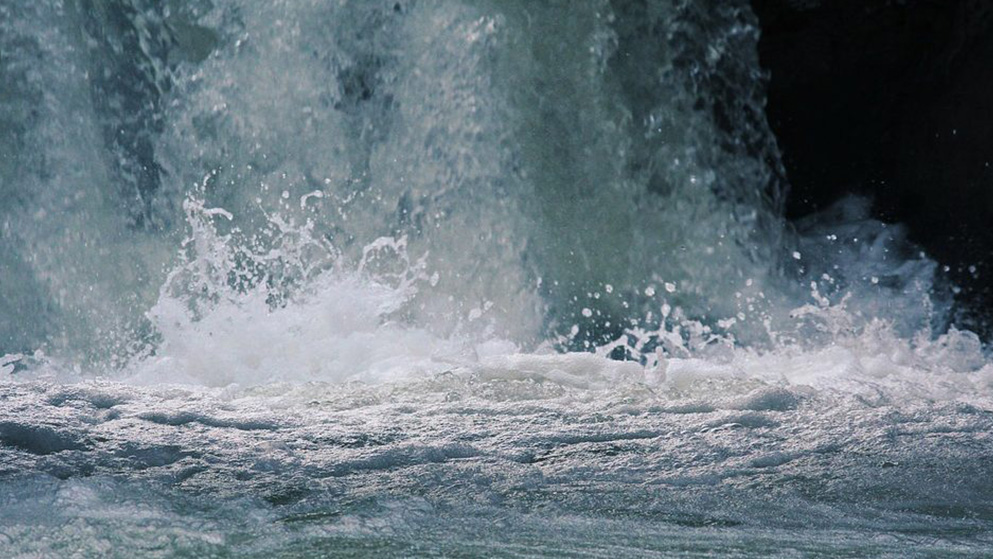
Alaskan and Pacific Northwest coasts spared from tsunami, following 7.9 magnitude earthquake

Early Tuesday morning local time, a 7.9 magnitude earthquake occurred near Kodiak Island in the Gulf of Alaska. Officials across the Alaskan coast, as well as on the western coast of British Columbia, Canada were placed on tsunami alert, while the remainder of the Pacific Northwest states were on watch. In San Francisco, the Department of Emergency Management asked residents located within three blocks of the coast and five blocks of the bay to “prepare to evacuate." At half past midnight, cellphones in Alaska buzzed with an emergency alert from the National Weather Service warning of an impending tsunami: "Emergency Alert. Tsunami danger on the coast. Go to high ground or move inland." The Kodiak Police Department insisted that locals find an area located at least 100 feet above sea level. An officer discouraged travelling up to Pillar Mountain, situated approximately 1,240 feet above sea level, as it was reportedly backed up. This urged residents to move away from coastal areas and seek higher ground at their local high schools, town pools, and hospitals.

As reservoirs run dry, Cape Town races to improve its climate resilience

Cape Town, South Africa is currently facing a looming water crisis that has potential to make it the first major city to shut off its municipal water supply. According to Cape Town Mayor Patricia de Lille, taps across the city are expected to run dry on April 22 – less than 90 days away. This date has come to be known as “Day Zero”. The factor determining when exactly Day Zero occurs is the combined capacity of the dams servicing the Western Cape Province. Once the capacity has fallen below 13.5%, “…municipal water supply will be turned off for all but essential services, like hospitals,” Time Magazine reports. Even though 13.5% of the dams’ water capacity may remain, the last 10% of water in a dam is “unusable” due to silt and debris; therefore, essential services would be relying on what amounts to just 3.5% of combined dam capacity.

Boston officials visit counterparts in Manchester, share resilience lessons learned from marathon bombing and arena attack

GRI Founding Director Dr. Stephen Flynn was joined by Boston Police Commissioner William B. Evans during a recent U.S. State Department-sponsored trip to London and Manchester. The visit was part of an initiative to share lessons learned from the Boston Marathon bombing and to learn firsthand how the community in Manchester responded to, and is recovering from, the arena attack. Other members of the delegation included representatives from the Boston Mayor’s office and Dave Fortier, who founded the One World Strong Foundation after being injured in the marathon bombing.

Rising seas, shrinking shores: Small island communities planning for harsh realities of climate change

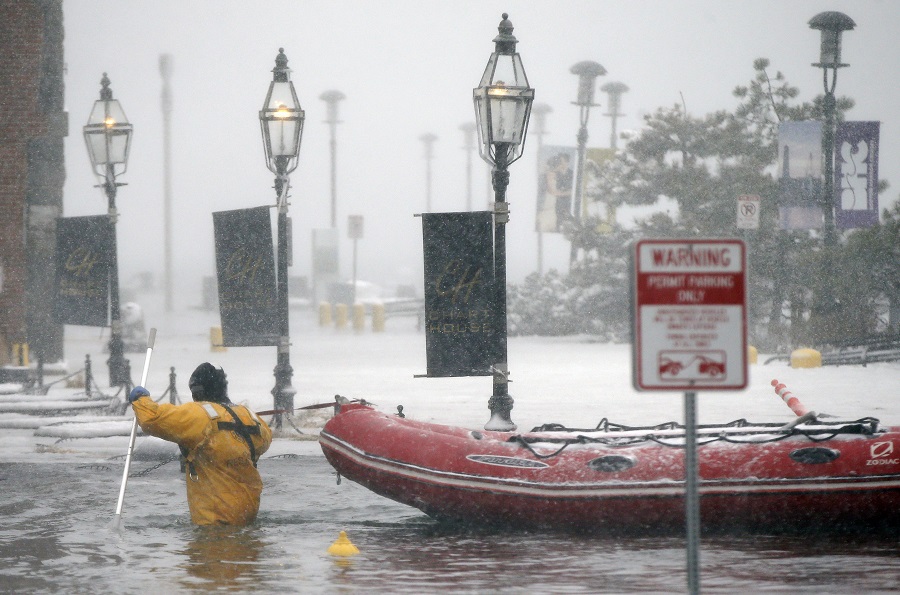
Last week in Boston, icy seawater flooded downtown streets and train stations during a "bomb cyclone" that brought over a foot of snow and caused several feet of storm surge. While images of a financial district underwater left many wondering how Boston would fare if this phenomenon intensifies, Bostonians were largely able to simply avoid the area, retreating into the rest of the city. Around the world, however, residents of islands realize they will not be able to do the same as sea level rise threatens their homes.
  • Previous
  • 63
  • 64
  • 65
  • 66
  • 67(current)
  • 68
  • 69
  • 70
  • 71
  • Next